Füllkrug, Bierhoff and Europe’s new football marketplace
In the summer of 1998, AC Milan splashed out €12.5 million to sign German target man Oliver Bierhoff from fellow Serie A outfit Udinese. The transfer reunited Milan’s newly-appointed head coach, Alberto Zaccheroni, with his star striker from his previous job in charge at Udinese. The 30-year-old Bierhoff, who had topped the Serie A scoring charts the previous season, won Germany the Euros and shone at the 1998 World Cup, was an instant success at the San Siro as his 19 league goals fired I Rossoneri to a sixteenth league title.
Zaccheroni’s Milan secured their Scudetto on the last day of the season, edging out a Lazio side that had recruited Christian Vieri and Marcelo Salas in the summer window for a combined €45 million. Despite the stirrings of the Premier League in England, Italy’s Serie A remained synonymous with transfer largesse around the turn of the century, with the likes of Ronaldo (€25 million), Juan Sebastian Veron (€30 million) and, err, Nicola Ventola (€21 million) moving for eye-popping fees on the cusp of the millennium.
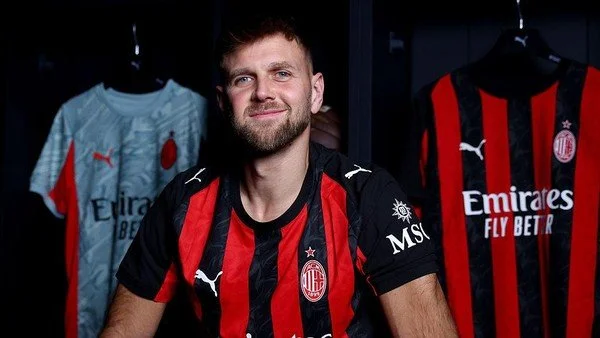
Milan’s Man: Niclas Füllkrug
A quarter of a century later, Milan have recruited another big German forward in the bulky shape of Niclas Füllkrug, on loan from relegation-threatened West Ham United. The 32-year-old striker leaves London after scoring just three goals in 29 West Ham appearances, and Nuno Espirito Santo keen to reinvest some of his £90,000-a-week wages elsewhere.
The sight of a West Ham flop being snapped up by a continental giant like Milan still seems unusual, with some online fans quick to describe it as “failing upwards”. However, it reflects Europe’s changed footballing landscape, warped by the financial power of the English top flight. This is an environment where we have seen Bournemouth buying FC Porto’s premier striker, Bayer Leverkusen’s midfield talisman moving to newly promoted Sunderland, and Brentford signing the Ajax captain.
Amid this great upheaval in the European game, Italian football has perhaps fallen further and faster than its traditional peers in Spain and Germany. Italian stadiums, with the exception of Juventus’ Allianz Stadium, are decaying and attendances dwindling. On the pitch, Serie A has gradually lost its star power, with Premier League exiles such as Scott McTominay, Rasmus Hojlund and Milan’s own Christian Pulisic thriving in Italy after struggling in England.
Milan will hope Füllkrug can revive his career in a similar manner to Pulisic and the recently departed Olivier Giroud, another physically imposing striker often criticised on British shores. Füllkrug’s miserable spell at West Ham did include brief flashes of quality after he was signed for a £27 million fee, such as a fine performance in defeat against Manchester City, but these occasional bright spots were invariably snuffed out by a series of injuries. The German striker missed 28 games for West Ham in the 2024-25 season, as he battled hamstring and Achilles problems.
Towards the end of last season, the forward’s frustration began to boil over, particularly in a brutally honest post-match interview following West Ham’s draw at home to relegated Southampton in which he conceded “sorry, we were shit. I’m very angry.”
Optimists in Milan will point out that Füllkrug led the line for Borussia Dortmund in a Champions League final less than two years ago, after scoring the winner against PSG in the semi-final. He has overcome injury problems earlier in his career, too, with his first two seasons at Werder Bremen wracked by fitness issues, before a torrent of goals across the following two campaigns earned him a transfer to Dortmund.
With this in mind, a €5 million purchase option could prove a bargain for Milan if Füllkrug’s loan spell is a success. If not, he will return to the London Stadium with two full seasons remaining on a lucrative contract.
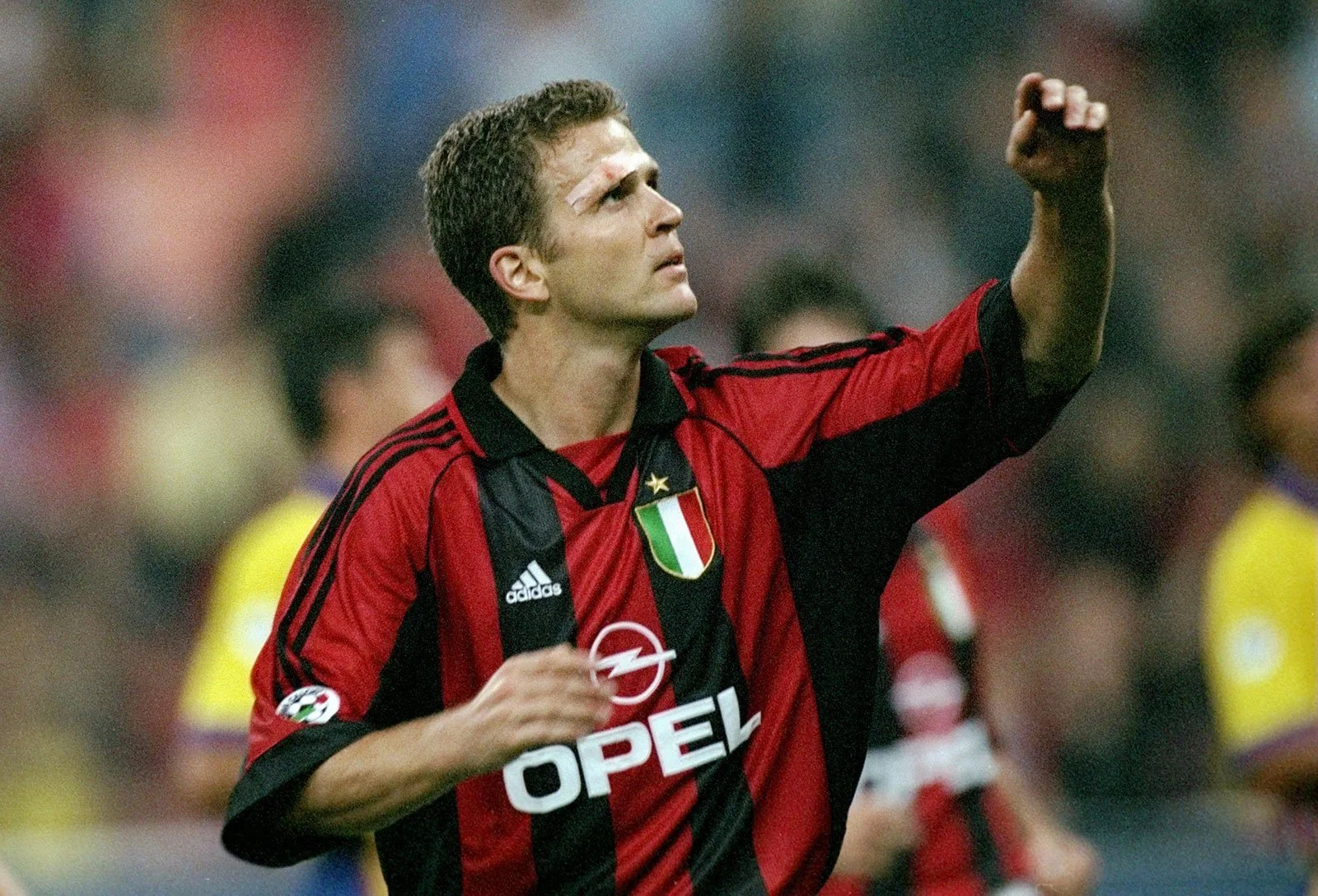
A throwback: German target man Oliver Bierhoff in AC Milan colours
Such a cut-price acquisition would have seemed out of place in the late 90s, when Milan could lean on Silvio Berlusconi’s billions to bring in top-price talent at a stroke. These days, I Rossoneri are under the wing of RedBird Capital Partners, an American investment management firm who have stressed financial sustainability. A replacement for the centenarian San Siro stadium, to be shared with Internazionale, is expected to open in the early 2030s and could transform the matchday revenues of both clubs. Until then, expect the signings to be more Niclas Füllkrug than Oliver Bierhoff.